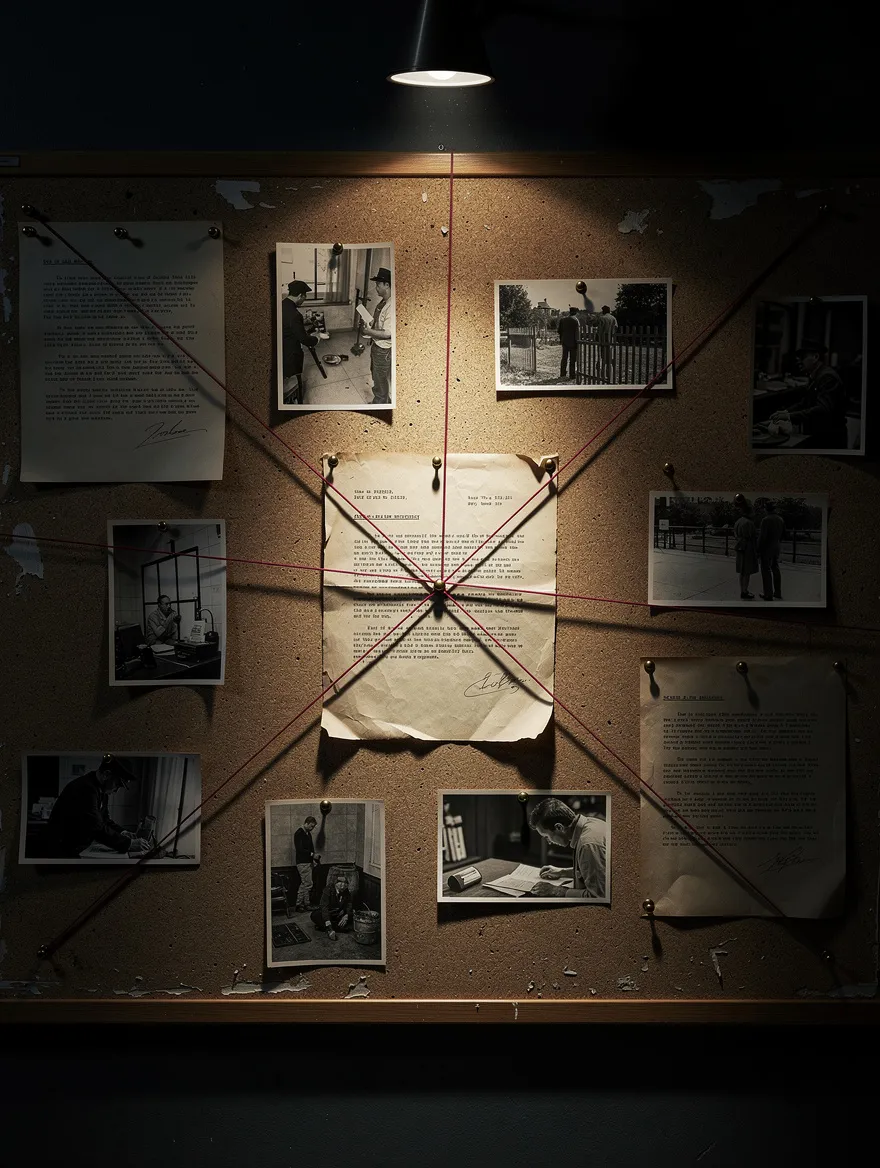
A dispute is adversarial
A dispute is not just large. It is hostile.
The other side does not need to destroy your proof. A better-resourced opponent only has to flood the record, split one fact across a dozen filings, blur it with noise, and run out the clock, until what actually happened becomes too expensive to reconstruct before the filing is due.

That is the real failure PRAMAAN is built against. Not "lawyers need to write faster." The fact that would have won is usually already in the file. It loses anyway, because the matter wasn't built to let proof surface, hold, and survive an opponent working to keep it down.
Proof gets buried before it gets disproved
The proof is rarely defeated on the merits. It is buried before anyone argues about it: separated from its source, drowned in volume, deferred past the deadline.
So proof cannot be something you hope to recover at the end, when the clock runs out and the record has already hardened. It has to be built into the matter from the beginning: every claim grounded, every source traceable, every contradiction visible, every fact still testable while counsel can still act. That is why the matter, not the document, is the thing worth getting right.
The page you find three weeks too late
Picture the failure that actually hurts. Three weeks after filing, someone finds it. Page 8,140. The receipt that proves delivery on 12 March, and contradicts the other side's affidavit.
It was there the whole time.
But the filing is already public. The contradiction surfaced too late to use: a weapon you owned the whole time and never fired. Nothing was missing. The matter just had no way to surface the one connection that mattered, in time.
A document is downstream; the matter is the substrate
A folder holds documents. A matter holds the relationships between them: what supports what, what contradicts what, what was admitted, what was reviewed, and when.
That difference matters because proof does not live in one page. It lives in the connection between a claim and the record that can defend it.
A document is downstream. It is the final export: the last thing a matter produces. If the matter underneath is noisy and disconnected, a better-written brief only makes the weakness look polished. So PRAMAAN builds the proof infrastructure underneath the document layer.
A grounded claim is the atom
For that infrastructure to hold, proof can't be a paragraph inside a draft. The smallest unit, the atom the whole matter is built from, has to be a grounded claim: an assertion welded to its source.
A line like "goods were delivered on 12 March" stops being a sentence and becomes an object: the claim, the delivery receipt that backs it, and the review state counsel gave it. It is meaningful, contestable, and checkable: not "true" because the system said so, but something the system can trace, test, link, and defend.
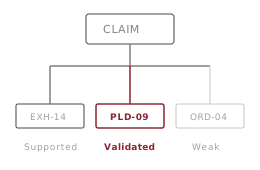
A grounded claim isn't a line you hope holds. It's an object that knows what backs it, and can answer when it's attacked.
Links make contradiction visible
Atoms alone aren't enough. The matter becomes computable when the claims are linked: what supports, what admits, what contradicts.
That same delivery claim is contradicted by the respondent's affidavit, paragraph 9: "no delivery before 20 March." In a folder, those two pages sit thousands apart and no one lines them up. That is exactly the gap an opponent flooding the record relies on. In the infrastructure, it's a single visible link: caught in your own record before you file, and pulled from theirs to use in cross.
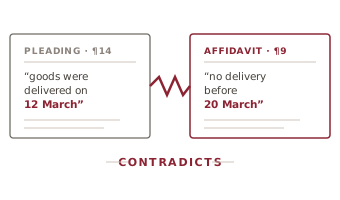
This is where the pressure stops working. Volume and noise only win when claims float free of their sources and conflicts stay hidden. Linked, they surface on their own.
Filing permanence makes this urgent
In law there is no undo. A filing is public the moment it lands, with no quiet edit and no taking it back. The opponent's whole game is to keep the truth out of reach until that moment passes.
So the proof has to hold before it goes out: every claim traced, every contradiction surfaced, while there is still time to act. That is only possible when every event sits on a timeline you can actually reason over, not scattered across a folder you can only search.
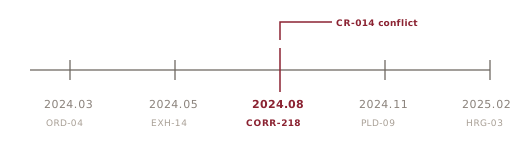
Counsel decides; PRAMAAN gates
The infrastructure never decides truth. Counsel does. It traces, links, flags, and blocks; anything the AI proposes stays provisional until a lawyer reviews it.
We don't build a chatbot that talks about a matter. We build bounded agents that work over the proof infrastructure: grounded, cited, behind review.
What we believe
Pramaan means proof in Sanskrit. The name is the bet.
We believe proof should not be a paragraph you hope survives inside a final filing. It should be infrastructure inside the matter itself.
If the matter underneath is noisy, disconnected, and untestable, the final document is just polished risk. But if the matter is computable, if every claim knows its source, every contradiction can surface, and every fact can be challenged before it is filed, then drafting becomes downstream of something stronger. PRAMAAN builds that substrate. The plumbing is mostly invisible: grounded claims, source spans, contradiction links, admission links, chronology, review state, provenance, override history. But that invisible layer is what lets the evidentiary record survive a brutal adversary.
That is what making matter computable means in practice: "goods delivered 12 March" stops being a sentence you hope survives and becomes a grounded claim: welded to the receipt at page 8,140, linked to the affidavit that contradicts it, and flagged for counsel before a word is filed.
Not faster paperwork. Proof that can answer when it is attacked.